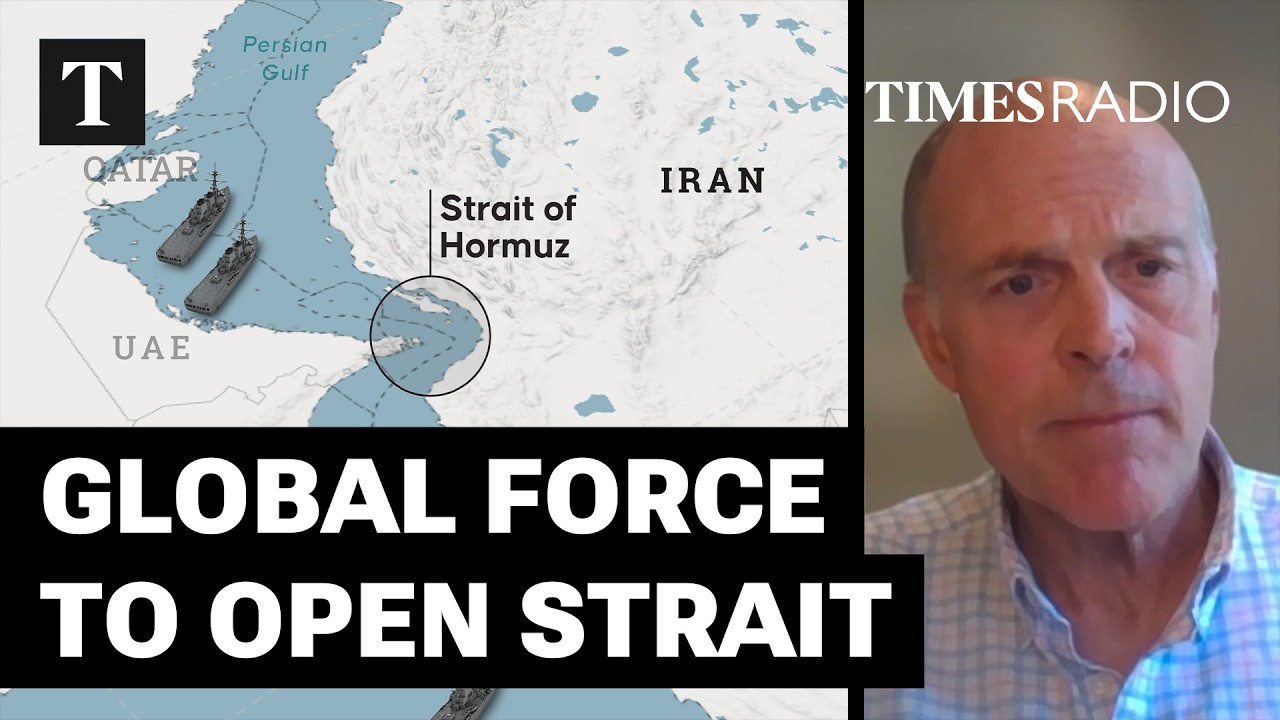
In a dramatic escalation of tensions in the Gulf of Oman, the US Navy has seized a massive 900-foot Iranian container ship after it defied orders to halt, with President Trump confirming American forces now control the vessel. Vice Admiral Duncan Potts, a veteran of Gulf security, calls for an immediate international coalition to safeguard the Strait of Hormuz, drawing parallels to successful anti-piracy efforts. This bold action heightens global risks, potentially derailing fragile peace talks with Iran.
The seizure unfolded late last night, marking a significant confrontation as US warships fired warning shots and boarded the Iranian-flagged ship, now identified as the Tusca. This operation underscores Washington’s hardening stance against Iranian disruptions in vital shipping lanes, amid accusations of blockade violations. Potts, speaking on a live broadcast, emphasized the need for unified global response to prevent further chaos in this critical chokepoint for oil and trade.
Potts, who commanded UK maritime forces and led operations against Somali pirates from 2010 to 2012, argued that international cooperation was key to resolving such threats. “The secret was building a coalition and rallying the global maritime community—ship owners, insurers, and nations—to enforce a plan,“ he said, stressing that the Strait of Hormuz must remain open under international law. His words carry weight, given his firsthand experience in these waters.
This incident isn’t isolated; it echoes Iran’s history of seizing vessels, like the British tanker Stena Impero in 2019, and recent Houthi attacks in the Red Sea. Potts warned that allowing Iran to assert control over the strait would set a dangerous precedent, affecting not just the Gulf but global waterways from the Malacca Straits to the South China Sea. The world watches as trade routes hang in the balance.
President Trump’s decision to enforce a blockade has sparked debate, with some viewing it as a strategic leverage point ahead of potential talks in Pakistan. Potts cautioned against framing it as outright warfare, suggesting instead that it aligns with efforts to uphold the UN Convention on the Law of the Sea. “Nations have a right to free navigation through international straits, even in territorial waters,“ he noted, highlighting the rules-based order at stake.
European countries, including the UK, now face pressure to contribute to escort operations, as suggested by defense experts. Potts acknowledged the Royal Navy’s reduced capacity due to global commitments, including monitoring Russian activities nearer home. Yet, he insisted that prioritizing the Hormuz crisis is essential, drawing from his own history of escort missions in the region.
The broader implications are alarming: any disruption in the Strait could spike oil prices worldwide, impacting economies from Asia to Europe. Potts’ call for an international force resonates as a sensible, proactive measure, much like the anti-piracy coalitions that stabilized Somali waters. With Iran demanding control as a negotiation tactic, the stage is set for heightened standoffs.
In the interview, Potts reflected on the eight-and-a-half-hour time difference between Tehran and Washington, fueling a cycle of rapid escalations and responses. “Things change daily, and we must act decisively,“ he urged, advocating for a galvanized trading community to support enforcement efforts. This isn’t just a US-Iran issue; it’s a global one demanding immediate attention.
Critics argue that Trump’s approach risks widening the conflict, potentially drawing in allies reluctantly. Potts countered that firm action prevents precedents that could embolden other actors, like in the Bab el-Mandeb strait. As tensions simmer, the international community must weigh the costs of inaction against the perils of intervention.
The US move has already prompted reactions from key players, with France and others echoing calls for restraint while preparing contingency plans. Potts’ expertise underscores the urgency: “We’ve seen this before, and we must avoid history repeating.“ His vision of a unified force offers a path forward, blending diplomacy with deterrence.
Amid this uncertainty, the seized ship’s fate remains unclear, with US officials vowing to maintain pressure until Iranian provocations cease. Potts’ insights serve as a clarion call, reminding the world that the Strait of Hormuz is a lifeline not for one nation, but for all. As developments unfold, the need for collective action grows more pressing by the hour.
This breaking story highlights the fragile state of global security, where one seizure can ripple into widespread instability. Potts’ recommendation for an international coalition isn’t just advisable; it’s imperative to preserve the free flow of commerce and avert a larger crisis. The world stands at a crossroads, and the response in the coming days will define the future of these vital seas.